





Why this project?
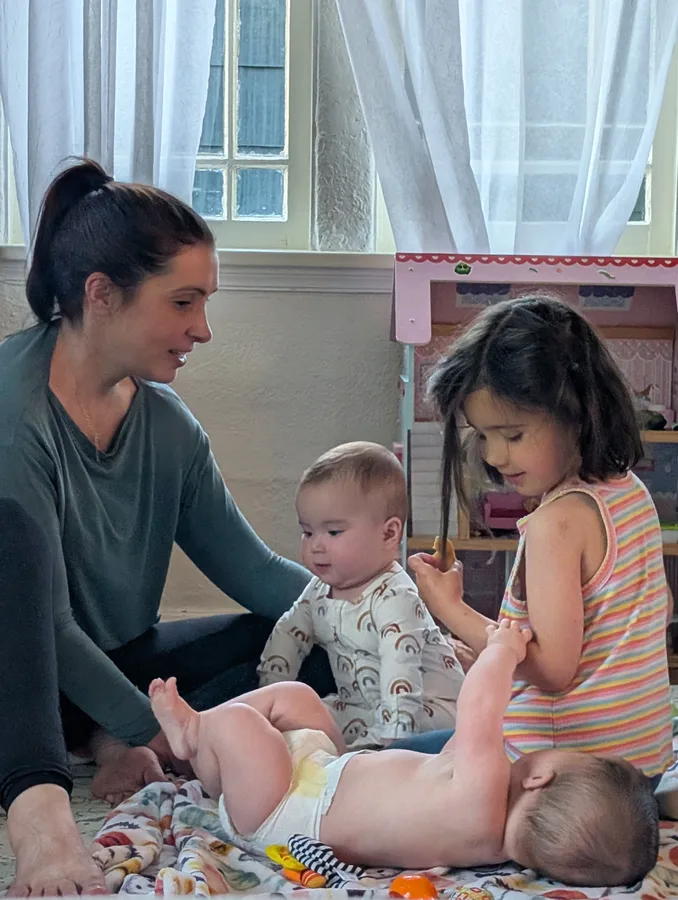
This project starts with a father looking for answers.
I’m gathering lessons from parents, teachers, researchers, and women who know what they wish someone had taught them. Both what to teach and how to make it stick.
The Blind Spots
Double standards
Our daughters may have their abilities doubted before they get a chance to show what they can do. People may push past their boundaries and expect them to go along, or make them feel like they owe an apology for speaking up.
As dads, we can miss these moments when we haven’t had to navigate them ourselves. We can help our daughters recognize a double standard, name what’s happening, and decide how to respond.
Who gets represented
Some blind spots are built into the world our daughters grow up in, from whose work gets taught to whose bodies are used to test car safety.
- In a top-cited psychiatry sample, men held 76% of first-author and 80% of senior-author positions.4 Women were only 12–14% of APA journal authors in the 1960s.5
- In a large Open Syllabus analysis of assigned college readings, men outnumbered women among the most-assigned authors 718 to 100—roughly 88% to 12% in that comparison.6
- Women run a record 11% of Fortune 500 companies7 and hold 28% of the seats in the U.S. Congress.8
- Only 67 women have ever won a Nobel Prize, out of roughly 1,000 laureates since 1901.9
- Women directed just 13% of the top 250 films of 2025.10 Startups founded only by women received about 1% of U.S. venture capital in 2024.11
- For decades, crash-test dummies were modeled on the average man. A belted woman has 73% greater odds of serious injury in a frontal crash than a man in the same crash.12
What girls are facing
- 53% of female high-school students reported persistent sadness or hopelessness in 2023.1
- Among girls ages 3–17, 13% had current diagnosed anxiety in 2023–24.2
- 46% of adolescents say social media makes them feel worse about their body.3
- 54% of U.S. girls ages 15–17 reported experiencing at least one of six forms of cyberbullying asked about in a 2022 survey.13
- In 2023, 17% of female high-school students reported experiencing sexual violence in the previous year.14
- In 2025, 18% of female high-school students reported being physically active for at least 60 minutes each day in the previous week, compared with 32% of male students.15
Sources
- CDC, 2023 Youth Risk Behavior Survey ↩
- CDC, children’s mental health data ↩
- U.S. Surgeon General, social media and youth mental health ↩
- Authorship in top-cited psychiatry journals (PMC) ↩
- Women authors in APA journals over six decades (PubMed) ↩
- TIME, Open Syllabus analysis of assigned college readings ↩
- Fortune, women CEOs of the Fortune 500 (2026) ↩
- Pew Research Center, women in the 119th Congress ↩
- NobelPrize.org, Nobel Prizes awarded to women ↩
- San Diego State University, The Celluloid Ceiling (2025) ↩
- PitchBook, US All In: Female Founders in the VC Ecosystem ↩
- Stanford Gendered Innovations, crash test dummies ↩
- Pew Research Center, Teens and Cyberbullying (2022) ↩
- CDC, Youth Risk Behavior Survey Data Summary & Trends Report (2013–2023), p. 51 ↩
- CDC, Youth Health in Focus: Physical Activity (2025) ↩
Zack Prager, MAPP
Humane engineer. Father of three daughters.

I studied the science of happiness at the University of Pennsylvania and cognitive science, with a focus on AI, at UCLA. For the past decade, I’ve worked to make software a tool for human thriving rather than exploitation.
That work has taken different forms: helping people express gratitude, creating phone-free spaces, and building tools that support learning, attention, and emotional well-being. The question underneath has stayed the same: how do we build things that help people live better?
Now I’m raising three daughters, and that question has become personal.
What should I teach them about their bodies, their voices, their relationships, and their place in the world? What am I missing because I’ve never had to navigate life as a girl?
Explore my work in humane technology →